The evolution of printing has shaped the way people share knowledge, communicate ideas, build brands, and connect with audiences. Today, printed materials are part of everyday life: books, magazines, packaging, menus, brochures, catalogs, signage, corporate stationery, and advertising pieces all exist thanks to centuries of innovation in print technology.
Before printing became widely available, written information had to be copied by hand. This made books, documents, and visual materials difficult to produce, expensive to obtain, and limited to only a small part of society.
Over time, printing changed that reality. It made it possible to reproduce information faster, more consistently, and at a much larger scale. Its impact was so significant that printing is still considered one of the most important inventions in human history.
Today, the evolution of printing goes far beyond books and newspapers. It plays a major role in how companies present their products, reinforce brand identity, communicate with customers, and create physical brand experiences across different markets.

What Is Printing?
Printing is the process of reproducing text, images, graphics, or designs onto a physical surface. This surface can be paper, cardboard, fabric, packaging materials, rigid substrates, or specialty materials used in professional production.
At its most basic level, printing began as a method of transferring ink from one surface to another through pressure. Over the years, this principle evolved into more advanced, precise, and efficient production methods.
Modern printing now includes processes such as offset printing, digital printing, large-format printing, packaging production, specialty finishes, and print fulfillment solutions for businesses, hotels, restaurants, retailers, and corporate brands.
The Origins of Printing Before Gutenberg
Although the history of printing is often associated with Johannes Gutenberg, printing existed long before his press.
Centuries before Gutenberg’s invention, woodblock printing was already being used in China. This method involved carving text or images into wooden blocks, applying ink, and pressing the block onto paper.
One of the most important examples from this period is the Diamond Sutra, created around 868 A.D. It is considered one of the oldest dated printed books that still exists today.
Woodblock printing also spread to other parts of Asia, including Japan and Korea, where printed texts were used mainly for religious, cultural, and philosophical purposes.
Although these early methods were innovative, they were still labor-intensive and less flexible than the printing systems that would emerge later.
Gutenberg’s Printing Press and a New Era of Communication
One of the most important milestones in the evolution of printing was the development of Johannes Gutenberg’s movable-type printing press in the 15th century.
Gutenberg created a system that used individual metal pieces for letters, numbers, and symbols. These pieces could be rearranged to form different pages, making the production of printed texts faster and more efficient.
This innovation transformed the way information was distributed. Books could be produced in greater volume, with more consistency and at a lower cost than handwritten copies.
The Gutenberg press helped expand access to knowledge and played a key role in education, science, religion, politics, and culture.
The Rotary Press and Mass Production
For centuries, printing continued to evolve from Gutenberg’s original concept. As demand for newspapers, books, and publications increased, the industry needed faster ways to produce large quantities of printed materials.
In the 19th century, the rotary press became a major breakthrough. Instead of printing sheet by sheet with a flat press, this system used rotating cylinders to transfer ink onto paper at much higher speeds.
The rotary press made mass production possible and helped support the growth of newspapers, magazines, and large-circulation printed media.
This stage marked a major shift in the printing industry: print was no longer only a tool for books and documents. It became a powerful medium for communication, advertising, education, and public information.
Offset Printing and Its Impact on Professional Print Production
Another major advancement in the evolution of printing was offset printing.
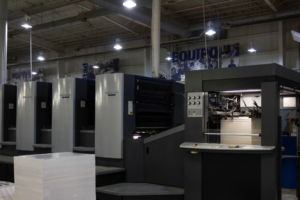
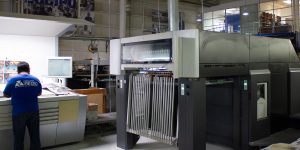
Offset printing is based on the principle that oil and water do not mix. It uses printing plates to transfer an image onto a rubber blanket and then onto the final printing surface.
This process delivers high-quality results, sharp details, color consistency, and efficiency for medium- and high-volume print runs.
Offset printing remains one of the most important methods in professional print production today. It is widely used for:
- catalogs
- magazines
- books
- brochures
- menus
- packaging
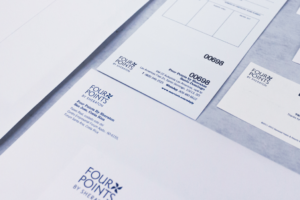
- corporate stationery
- promotional materials
- hotel collateral
- branded print materials
Its value lies in its ability to produce consistent, high-quality materials at scale, making it especially useful for companies that require professional brand presentation across multiple pieces or locations.
Laser Printing, and Digital Advancements
The printing industry continued to evolve with new technologies that improved speed, accuracy, and flexibility.
The linotype machine changed typesetting by allowing operators to compose full lines of text more efficiently. This innovation was especially important for newspapers and editorial production because it reduced manual work and accelerated publishing timelines.
Later, in the 20th century, laser printing introduced a new way to print using electronic processes. This made printing faster, more accessible, and more adaptable to offices and businesses.
As technology continued to advance, inkjet printers, digital presses, and automated production systems became part of the modern printing landscape.
However, professional printing continued to rely on specialized equipment and production methods for projects that require high volume, premium quality, brand consistency, and advanced finishing.
The Evolution of Printing in the Digital Age
Today, the evolution of printing is closely connected to technology, automation, personalization, and logistics.
Modern print production is no longer limited to traditional printing presses. It can now include digital workflows, color management, specialty finishes, large-format production, packaging, web-to-print platforms, and fulfillment solutions.
This allows companies to produce printed materials in a more strategic way, adapting to seasonal campaigns, multiple locations, brand guidelines, and market-specific needs.
In industries such as hospitality, retail, real estate, tourism, restaurants, and corporate services, printed materials continue to be essential for communication and brand experience.
Printed materials help businesses:
- reinforce visual identity
- improve customer experience
- present products and services
- communicate important information
- maintain consistency across multiple locations
- elevate brand perception
- connect physical and digital experiences through QR codes and interactive elements
Why Printing Still Matters Today
Even in a digital-first world, printing remains highly relevant.
Printed materials offer a tangible brand experience that digital channels cannot always replace. A high-quality menu, premium packaging, printed catalog, welcome kit, hotel directory, or corporate brochure can communicate attention to detail, professionalism, and trust.
For businesses, print is not only about information. It is about presence.
A printed piece can be held, displayed, delivered, installed, stored, and experienced in a physical environment. That makes it especially valuable for hotels, restaurants, retail spaces, events, offices, and customer-facing brands.
In hospitality, for example, printed materials are part of the guest journey. Menus, room directories, branded collateral, event materials, signage, packaging, and informational pieces help create a more organized and consistent experience.
The evolution of printing does not mean print has lost relevance. It means print has adapted to the way modern brands communicate.
The Role of Printing for Businesses in the United States
In the United States, many companies need print solutions that can support brand consistency, high-volume production, fast turnaround times, and multi-location operations.
Hotels, restaurant groups, retail brands, real estate developments, event organizers, and corporate teams often need printed materials that meet technical standards and follow specific brand guidelines.
For these companies, professional printing is not just a production service. It is a strategic part of brand management.
The right print partner can help businesses produce materials with the correct specifications, finishes, formats, quality control, and logistics support.
This is especially important for brands operating across different markets, where consistency and speed are key to maintaining a strong brand presence.
Grupo Regio: Professional Printing for Brands in North America
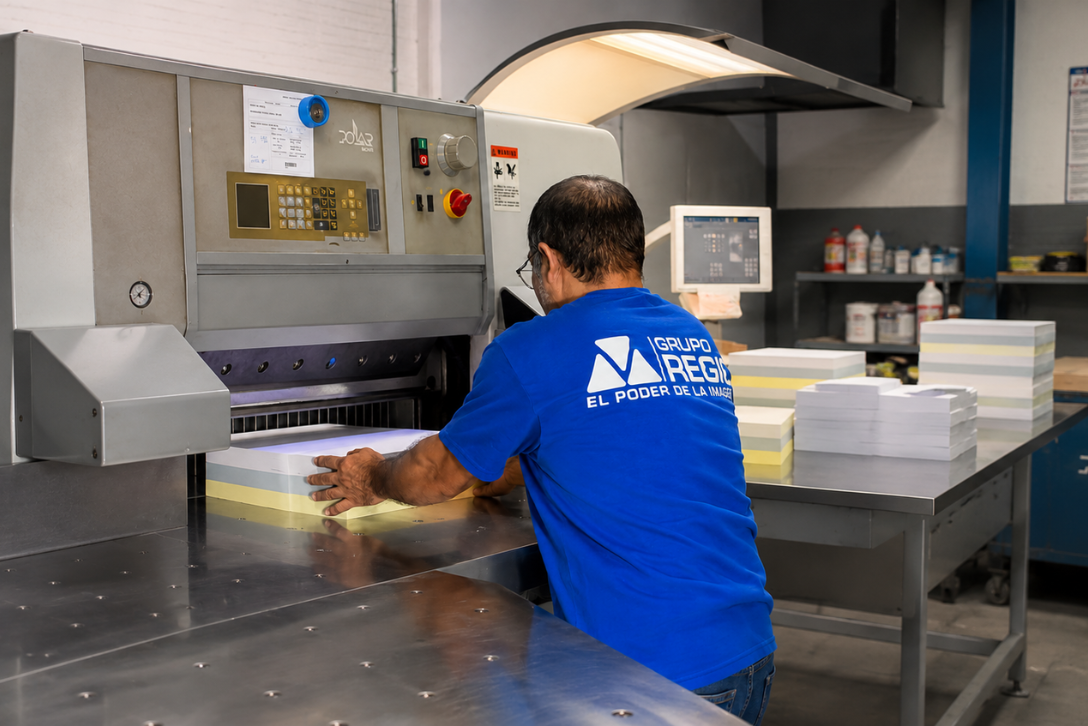
Grupo Regio has evolved alongside the printing industry, combining experience, technology, and production capacity to support professional print projects in Mexico, the United States, and the Caribbean.
With more than 35 years of experience, Grupo Regio works with companies that require high-quality printed materials, brand consistency, and operational efficiency.
Our services include offset printing, digital printing, large-format production, packaging, hotel collateral, corporate materials, and logistics solutions for brands that need reliable print production across different markets.
The evolution of printing continues, and today’s companies need partners that can combine technology, expertise, and execution to deliver materials that meet modern business needs.
Conclusion
The evolution of printing has gone through centuries of transformation, from woodblock printing and Gutenberg’s press to rotary printing, offset printing, laser printing, and digital production.
Each stage has made it possible to share information faster, reach larger audiences, and create higher-quality printed materials.
Today, printing remains essential because it helps brands communicate, build trust, and create memorable physical experiences.
In a digital world, professional printing continues to play a key role in branding, hospitality, packaging, retail, events, and corporate communication.
Grupo Regio supports this evolution with professional printing solutions for companies that need consistency, quality, and production capacity across North America and the Caribbean.
Frequently Asked Questions About the Evolution of Printing
What is the evolution of printing?
The evolution of printing refers to the historical development of printing methods, from early manual techniques and woodblock printing to modern offset, digital, and large-format printing.
Who invented the printing press?
Johannes Gutenberg is widely recognized for developing the movable-type printing press in Europe during the 15th century, although earlier printing methods existed in Asia centuries before.
Why was Gutenberg’s printing press important?
Gutenberg’s press made it possible to reproduce texts faster, more consistently, and in greater volume, helping expand access to books, knowledge, and communication.
Why is printing still important today?
Printing is still important because it allows businesses to create tangible materials for branding, communication, packaging, hospitality, retail, events, and customer experience.
What types of printing are used today?
Modern printing includes offset printing, digital printing, laser printing, large-format printing, packaging production, and specialty finishing techniques.